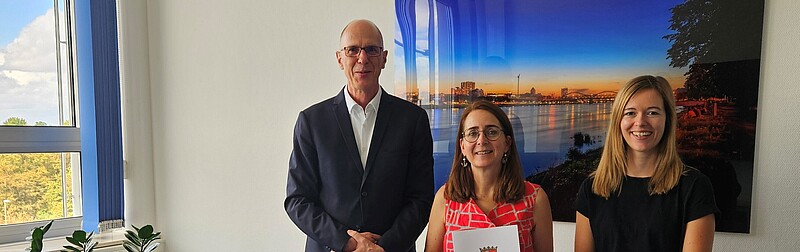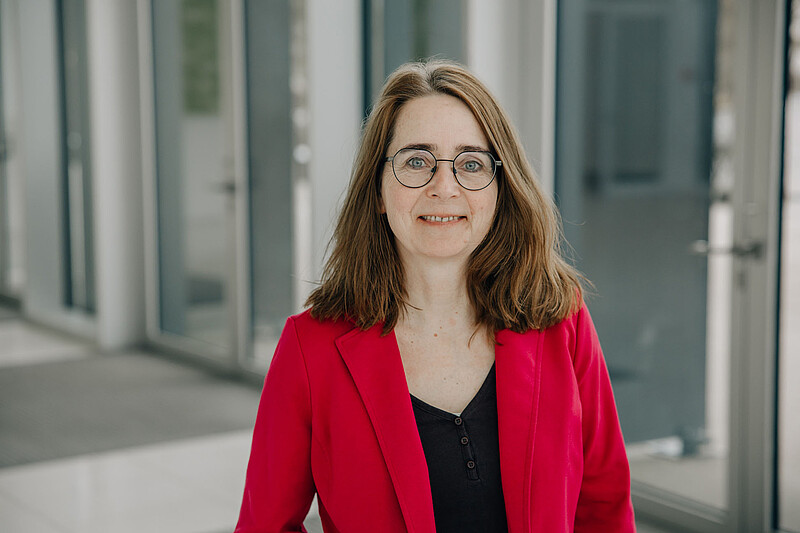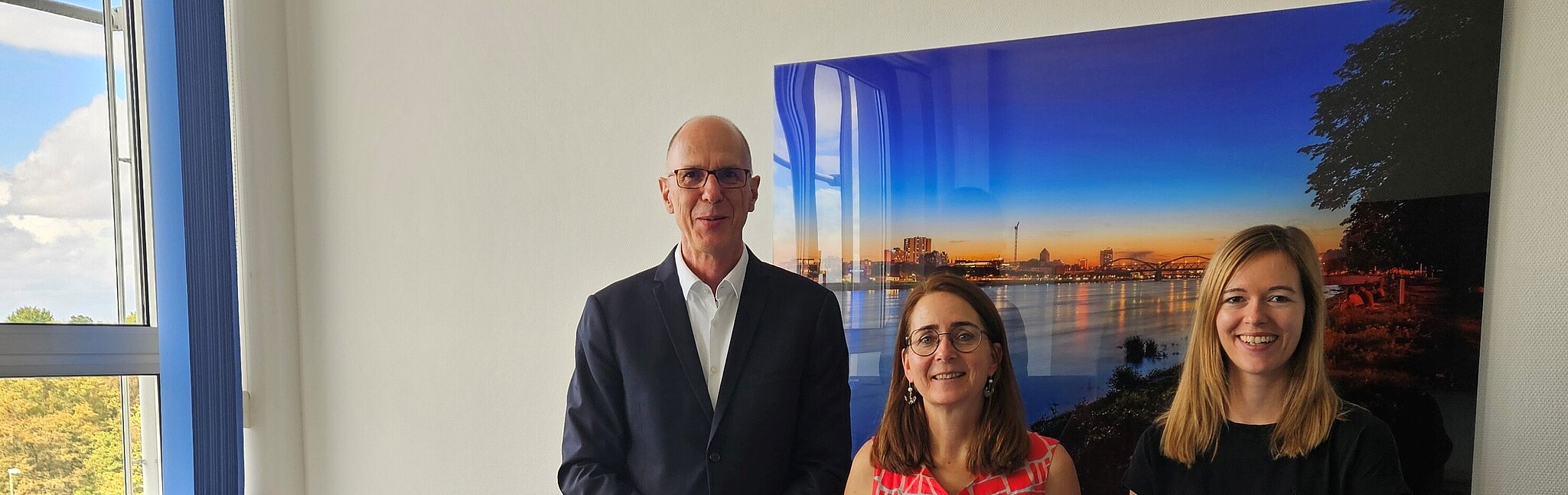
Effective September 1, Dr. Marlene Jänsch (born 1975) will begin her position as professor of social work in the context of aging. Previously, after several years of research work on the H³ project at Fulda University of Applied Sciences, Dr. Jänsch—who holds a doctorate and is a certified social pedagogue and social worker—provided education and conducted research as the administrator of the professorship in “Organizational Management in the Context of Regional Development Processes” during the summer semester of 2025 at HAWK Holzminden, as well as during the winter semester of 2025/2026 and the summer semester of 2026 as an adjunct professor of “Social Work and Social Gerontology” at DHBW Heidenheim. Here, Prof. Dr. Marlene Jänsch briefly introduces herself in an interview:
You’ve just started at HWG LU. Did you have a good start?
Absolutely! I was able to familiarize myself with the structures of HWG LU and the Department relatively quickly and get up to speed, so I’m now well prepared to start the lecture period. I’ve already received a lot of support and guidance from my colleagues, which has made my transition much easier.
What responsibilities does your new position entail?
I will represent the topic of aging in research and education within the field of social work. This includes a permanent focus on social gerontology within the curriculum. Fundamentally, however, it’s also about continuously exploring how the topic of aging can be meaningfully integrated into existing teaching structures. In terms of research, this raises a wide range of questions, ranging from social inequality or the construction of social equality in old age, to promoting engagement and political participation, all the way to education in old age—what’s known as geragogy.
What particularly appeals to you about this new position?
I am very much looking forward to representing and further developing a topic that has accompanied me throughout nearly my entire professional and academic life here at HWG LU, as well as to raising its profile in education and research. I also find interdisciplinary and international perspectives exciting, as well as the close connection to the practice of social work, particularly within what is now the first dual degree program in Social Work at HWG LU.
What do you see as a particular challenge?
The particularchallenge of social work with older adults lies in the fact that high practical demand is met with only a few field placements, comparatively little research, and very limited space in social work curricula. Furthermore, education, research, and practice in social work often present a rather deficit-oriented view of older adults. They are primarily viewed as recipients or users of social services rather than as active shapers of social discourses and processes.
During my first semesters, I will initially provide education in foundational courses into which I will consciously and actively incorporate topics, examples, and references from social work with older adults. So-called “age images” by no means refer solely to people in later life. Rather, they shape the orientations, evaluations, and categorizations that we often unquestioningly associate with certain age groups. I would like to continuously reflect critically on these perspectives in my education and further develop them pedagogically.
What did you do professionally before taking up your position in Ludwigshafen?
After earning a diploma in Social Work (Fulda University of Applied Sciences) and over 15 years of practical experience in social work (support for people with disabilities, care counseling, neighborhood coordination), I completed a master’s degree (MAPS Social Space) 10 years ago, which proved to be a turning point for me in pursuing an academic career. After several years as a research assistant at Fulda University of Applied Sciences, I earned my Ph.D. in 2025 on the topic of care work in the social sphere: educational potential in volunteer assistance for older adults, and subsequently held professorships at HAWK Holzminden and DHBW Heidenheim.
Why did you choose HWG LU?
Ludwigshafen University of Applied Sciences is regarded in the field of social work as a special place for critically reflective perspectives, which—despite the discipline’s now high academic standards—are not equally established everywhere. In addition, Rhineland-Palatinate has been my adopted home for nearly 30 years, and I am very familiar with the developments in the state’s structures regarding aging. I am therefore delighted in many ways that my professional path has now led me here.
Thank you very much!
(Interview: PE/Hoko)